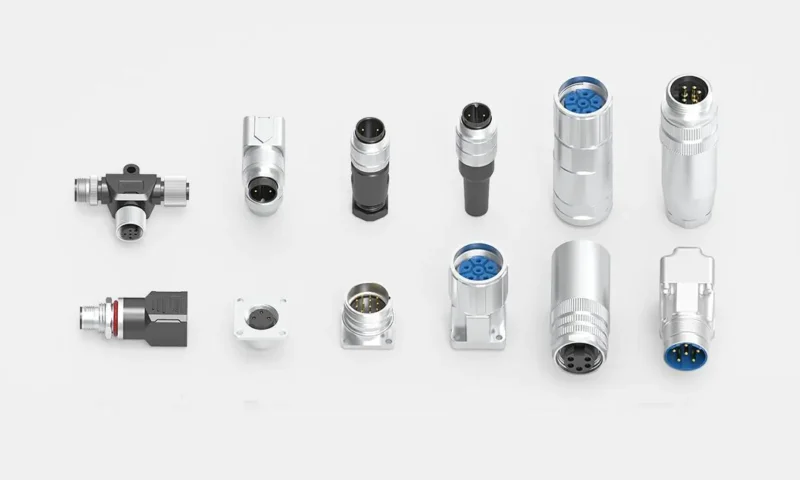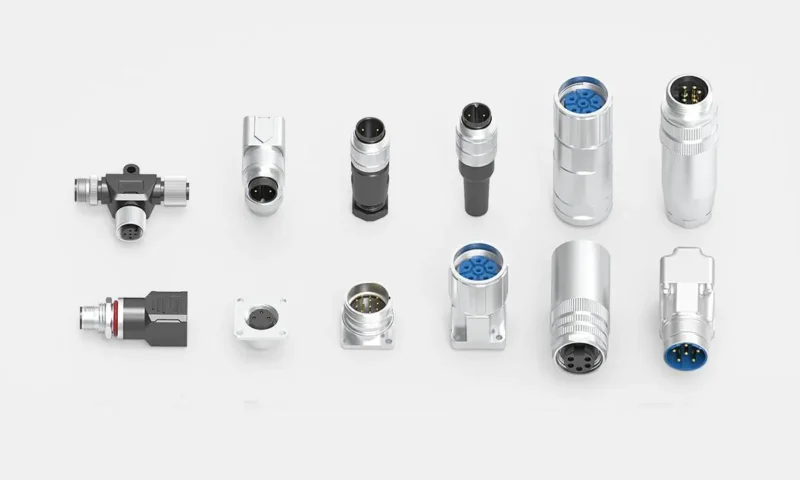
As Industry 4.0 pushes sensors into high-vibration, high-moisture environments, choosing the right M8 connector is critical. Here’s what engineers need to know.
1. Material First: Housing & Plating
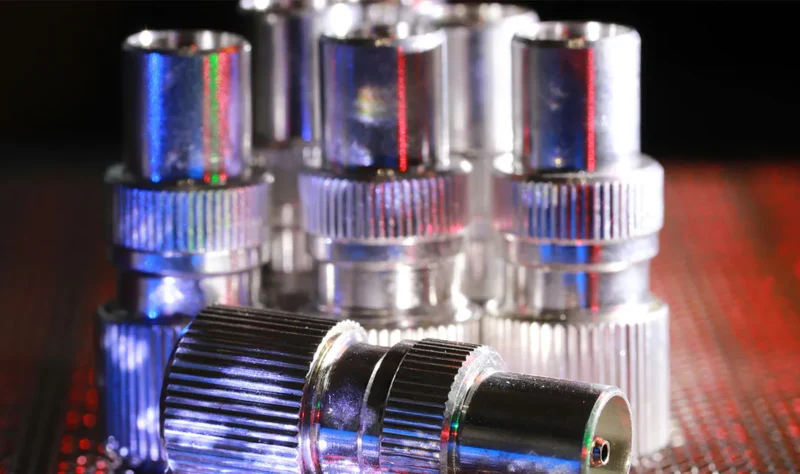
Standard connectors fail silently from corrosion. For harsh conditions, Xmost Industry Co., Ltd recommends copper alloy contacts with gold-over-nickel plating – this resists fretting corrosion caused by micro-vibrations on packaging lines.
Housing options:
- Nickel-plated brass: Maximum mechanical strength and EMC shielding.
- PA66 thermoplastic: Lightweight, chemical-resistant, UL94-V0 rated.
Temperature range matters: Standard M8 operates -25°C to +85°C. Extreme environments require -40°C to +95°C rating.
2. Pin Count = Thermal Reality
A common mistake: assuming all pins handle max current simultaneously.
| Configuration | Typical Current |
|---|---|
| 3-pin / 4-pin | 3–4A (power & sensors) |
| 5-pin / 8-pin | ≤1.5A (signal only) |
Thermal derating is real – the 8mm body has limited heat dissipation.
3. Coding for Communication
Using wrong coding causes signal failure:
- A-coding – Sensors/actuators (DC power)
- B-coding – Profibus fieldbus
- D-coding – 100Mbit Ethernet
4. Durability Metrics
- Mating cycles: Minimum 100 cycles; 500+ for robotics.
- Protection: IP67 standard; IP68/IP69K for washdown environments.
The cheap connector’s true cost is unplanned downtime. Xmost provides OEM & ODM M5/M8/M12/M16 series for Industry 4.0 automation, LED displays, 5G communications, and new energy.