A practical guide to selecting M8, M12, and M-series circular connectors for factory automation, robotics, and outdoor applications
Selecting the right connector for industrial automation is not a one-size-fits-all decision. Improper connector selection or integration can lead to intermittent signal loss, mechanical fatigue, environmental ingress, or premature failure under vibration and thermal cycling. In the industrial and automation sector, choosing the right connector is essential to ensure reliable signal and power transmission. This guide breaks down the key factors engineers and procurement teams must consider when specifying circular connectors for harsh environments.
Understanding Your Environment: The First Step
Before selecting any connector, define the conditions it will face. Harsh conditions like vibration, temperature extremes, water, dust, or corrosion can quickly degrade standard electronic connectors. Key questions to ask:
- Environmental Conditions: Is the connector outdoors, exposed to rain, salt spray, or UV sunlight? Will it be in a washdown zone or dusty environment?
- Mechanical Stress: Will the connector experience continuous vibration or mechanical shock? Is it mounted on moving equipment or near engines?
- Electrical Needs: What current and voltage will each contact carry? How many contacts are required?
- Size and Form Factor: Are there physical constraints in the installation space?
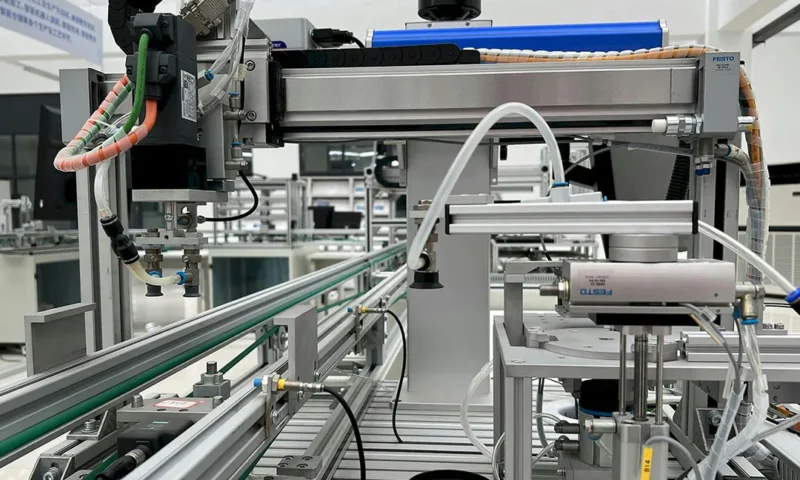
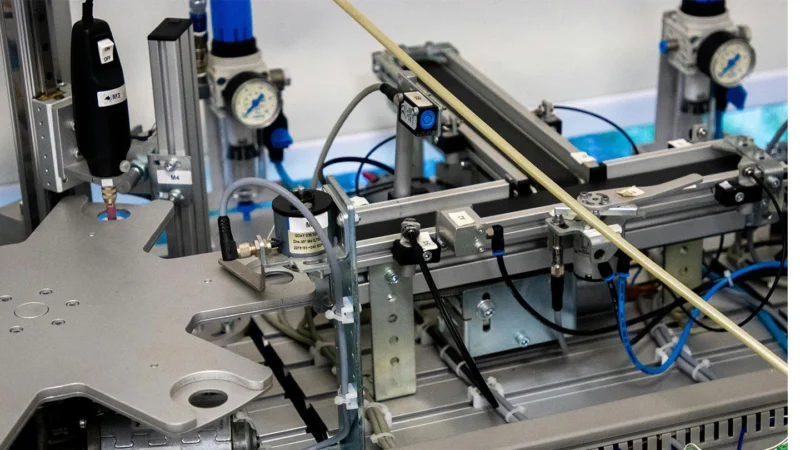
Industrial-grade connectors are specifically engineered to withstand these challenges, with core priorities being extreme stability and mechanical strength. Unlike consumer-grade products Industrial interconnect solutions prioritize reliability over lightweight and low cost, designed for harsh environments with strong EMI, extreme temperature swings, and intense vibration.
IP Ratings: Matching Protection to the Application
IP (Ingress Protection) ratings are critical for harsh-environment connector selection. This internationally used code (IEC 60529) consists of two numbers: the first (0–6) rates dust protection, the second (0–9K) rates water protection. For harsh environments, you’ll likely need IP65 or above.
| IP Rating | Protection Level | Typical Applications |
|---|---|---|
| IP67 | Complete dust protection; temporary immersion up to 1 meter for 30 minutes | Factory automation, outdoor sensors, washdown areas |
| IP68 | Complete dust protection; deeper or longer immersion (manufacturer-specified) | Underwater equipment, solar junction boxes, marine applications |
| IP69K | Dust-tight; withstands high-pressure, high-temperature washdown | Food processing, pharmaceutical equipment, heavy washdown zones |
Critical note: A connector’s IP rating applies only when it is properly assembled, fully mated, capped, or sealed according to the manufacturer’s instructions. An IP67 connector does not make an IP67 assembly if the cable jacket doesn’t bond to the boot.
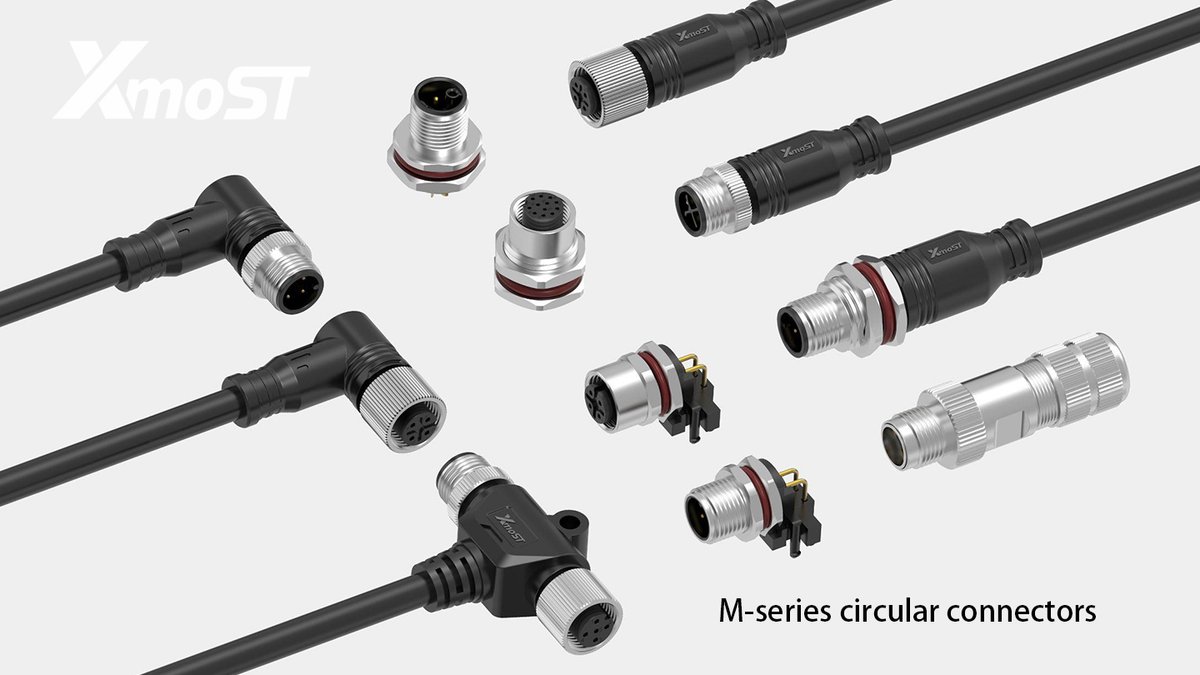
M-Series Connectors: Sizing Guide
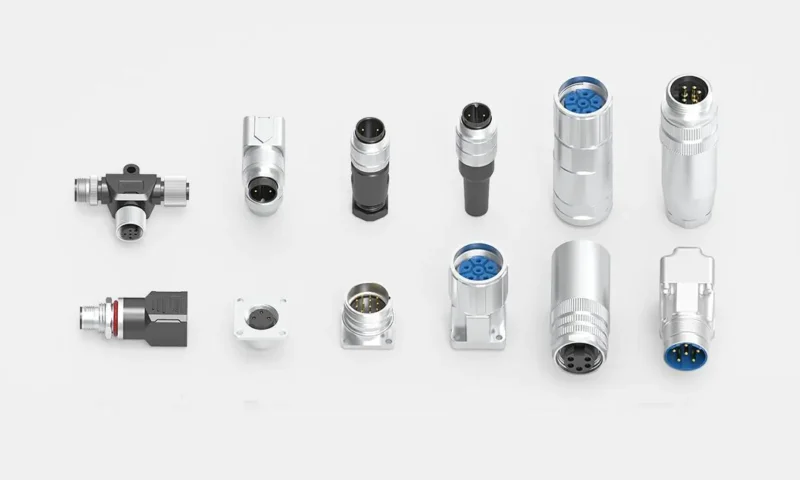
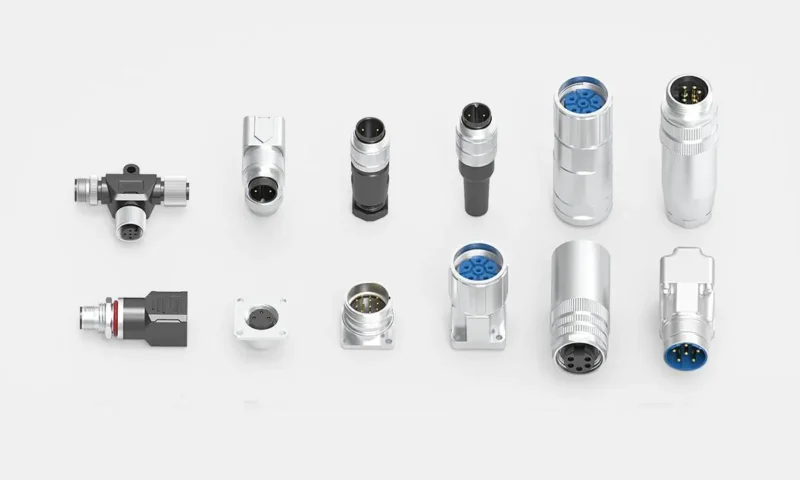
M8, M12, M17, and M23 refer to the thread size in millimeters of a circular industrial connector. Each size serves distinct applications:
Selection rule of thumb: If your application requires Cat6a (10Gbps) speeds or uses PROFINET/EtherCAT protocols in high-vibration environments, specify M12 X-Coded assemblies. For proximity sensors in tight automation cells, default to M8 A-Coded.
Coding Standards: Matching the Connector to the Signal Type
M12 and M8 connectors come in standardized codings depending on their functions. Mismatched coding is a primary cause of installation failure in field-wireable connectors.
M12 Coding Standards (IEC 61076-2-101):
M8 Coding Standards (IEC 61076-2-104):
| Coding | Pins | Application |
|---|---|---|
| A-Coding | 3 or 4 | Standard sensor signal transmission (24V DC) |
| B-Coding | — | Specialized applications |
M12 vs. RJ45: When to Choose Circular Connectors for Ethernet
For industrial Ethernet applications, the choice between M12 and RJ45 comes down to the installation environment. M12 cable connectors are typically the better choice for field devices exposed to vibration, washdowns, dust, oil, or outdoor conditions because they use circular bodies, threaded or push-pull locking, and sealed interfaces. Rugged RJ45 connectors are better when compatibility with standard Ethernet ports, dense switch layouts, or quick cabinet-level service is a priority.
Key difference: M12’s 12mm threaded circular interface helps maintain a secure connection in environments where vibration, dust, moisture, oil, coolant, washdown, or repeated motion can loosen or cause standard office-style connectors to fail. The screw-lock M12 interface stays securely connected even as machinery vibrates or robots swivel rapidly, preventing downtime caused by loose cables.
Data speed considerations: D-coded M12 connectors support 10/100 Mb/s Fast Ethernet for control networks like PROFINET and EtherNet/IP. X-coded M12 connectors support Gigabit and 10 Gb/s Ethernet for higher-bandwidth applications including machine vision, industrial cameras, and edge devices.
Common Selection Mistakes to Avoid
Mismatching technical specifications to system demands is one of the most common errors. This includes overlooking current and voltage ratings, IP levels, and mating cycle durability. Other frequent mistakes:
- Insufficient technical specifications: Performance requirements must be accurately defined, including current/voltage ranges, mechanical ratings, and environmental conditions
- Ignoring industry standards and certifications
- Not considering maintenance or downtime costs
- Miscounting contacts: Cable conductor counts typically include ground while connectors do not
- Overlooking vibration resistance: High vibration in industrial applications can cause terminal wires to loosen, resulting in broken or intermittent connections
Installation tip: Frequent mating and unmating can cause connector failure. Shock, damaging motions, and improper mounting may result in connector contacts, mating shells, and cable damage. Always follow the manufacturer’s assembly instructions and torque specifications.