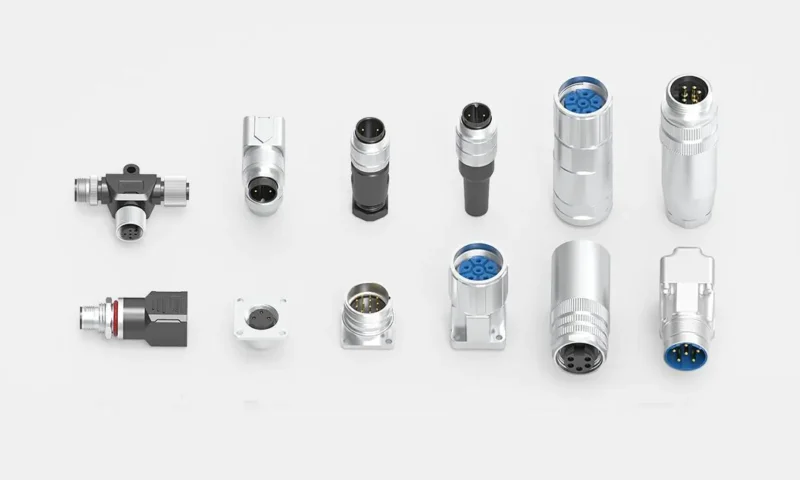
If you’ve ever dealt with intermittent sensor failures, corroded pins, or mysterious network drops on a factory floor, you already know the culprit. The wrong connector.
While RJ45 and traditional terminal blocks have their place, they fail miserably in wet, dusty, or vibrating environments. That’s precisely why the M12 circular connector has become the global standard for industrial automation, transportation, and outdoor equipment. But not all M12 connectors are created equal. Here’s what you actually need to know—and why our M12 circular connector solutions deliver where others fall short.
Technical Deep Dive: More Than Just a 12mm Thread
The M12 connector’s 12mm locking thread is only the beginning. The real intelligence lies in its coding system—a simple but critical feature that prevents you from plugging a power connector into a data port.
| Coding | Primary Use | Key Specs |
|---|---|---|
| A-coded | Sensors, actuators, DC power | 4A / 250V |
| B-coded | PROFIBUS fieldbus | 12 Mbit/s |
| D-coded | Industrial Ethernet | 100 Mbit/s (CAT5e) |
| X-coded | Gigabit Ethernet | 10 Gbit/s (CAT6a) |
| S/T-coded | AC/DC power delivery | 16A / 630V |
From an electrical perspective, standard M12 contacts are gold-plated (0.2–0.8μm thickness) to maintain contact resistance below 5mΩ even after 500+ mating cycles. Cheaper connectors using tin-plated contacts? Their resistance can drift above 20mΩ after just 100 cycles, leading to voltage drops and heat buildup. That’s why every M12 connector in our lineup uses precision-engineered gold-plated contacts for consistent, long-term signal integrity.
Protection ratings tell the real story. While commercial connectors rarely exceed IP54 (“splash-resistant”), a properly specified M12 circular connector achieves IP67 (full immersion up to 1 meter) or IP69K (high-pressure, high-temperature washdown). The screw-locking mechanism generates 0.5–0.8 N·m of torque—enough to withstand 10g vibration without loosening. Our M12 connector series goes further with extended sealing life and anti-corrosion materials.
Temperature range? -40°C to +85°C is standard. Specialized variants go further.
Where M12 Connectors Actually Dominate
Theory is fine. Let’s talk real deployments.
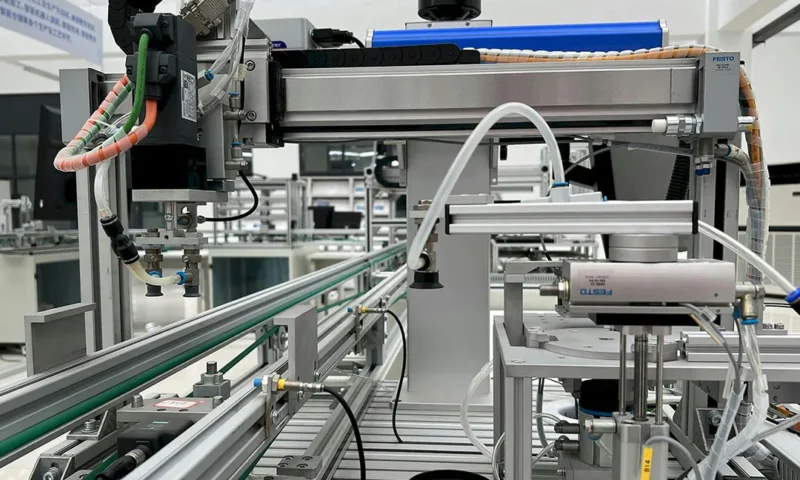
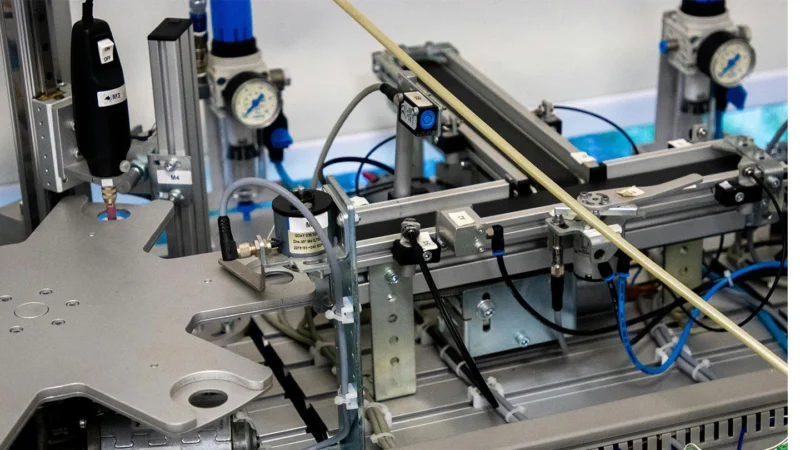
Factory Automation (60% of M12 usage): Every major automation brand—Siemens, Rockwell, Beckhoff—specifies M12 on their I/O blocks. A typical automotive assembly line uses 2,000–5,000 M12 connections, mostly A-coded for sensors and D-coded for PROFINET. When a connector fails on a welding robot, downtime costs approximately $500 per minute. M12’s threaded lock eliminates “vibration loosening” failures.
Food & Beverage Processing: Washdown environments destroy ordinary connectors. Caustic cleaners at 80°C, high-pressure sprayers at 1,200 PSI, daily steam cleaning. Only IP69K M12 circular connectors with stainless steel or PPS housings survive. One major dairy processor reported reducing connector-related downtime from 12 hours per month to nearly zero after switching to IP69K M12 assemblies—the same grade our M12 connector products are built to.
Railway & Transportation: Train doors, passenger information systems, onboard cameras, baggage scanners at airports. Railway standards EN 50155 and EN 61373 demand connectors that survive 30g shock, salt spray, and 15 years of thermal cycling. A robust M12 circular connector passes these requirements with margin to spare.
Renewable Energy: Solar inverters in desert installations face 70°C daytime temperatures, sandstorms, and 20-year service life requirements. Battery energy storage systems need vibration-resistant CAN bus connections. Both use M12 D-coded connectors for data and M12 T-coded connectors for DC power. Our M12 connector range covers every coding type you need for renewable applications.
Why Our M12 Connector Solutions Outperform
After evaluating dozens of suppliers across three continents, three advantages consistently separate the best from the rest—and define every M12 circular connector we deliver.
1. Verified long-term reliability. We don’t just claim IP67. Every batch of our M12 connectors undergoes 30-minute underwater immersion testing. Contacts are tested to 500 mating cycles with less than 3mΩ resistance change—exceeding IEC 60512 requirements by 40%. When you choose our M12 connector, you choose predictable, documented performance.
2. Field-wireable in under 3 minutes. Most M12 connectors require fiddly screw terminals and 8–10 minutes of assembly time. Our patented insulation-displacement (IDC) version of the M12 circular connector cuts that to 2.5 minutes. No stripping. No soldering. No special tools. For maintenance teams replacing 50 connectors per month, that saves roughly 6 hours of labor. Every M12 connector in our IDC series is designed for speed without compromising reliability.
3. Full coding coverage, same-day availability. A-coded, B-coded, D-coded, X-coded, S-coded, T-coded—all in stock. Straight and right-angle. Plastic and nickel-plated brass shells.
The Bottom Line
M12 connectors are not glamorous. They don’t make headlines. But when a $1.50 connector failure shuts down a $50,000 production line, you stop caring about price and start caring about reliability. The right M12 circular connector makes that failure rate disappear.
Specify correctly. Buy quality. Choose our M12 connector solutions. Never think about connector failure again.